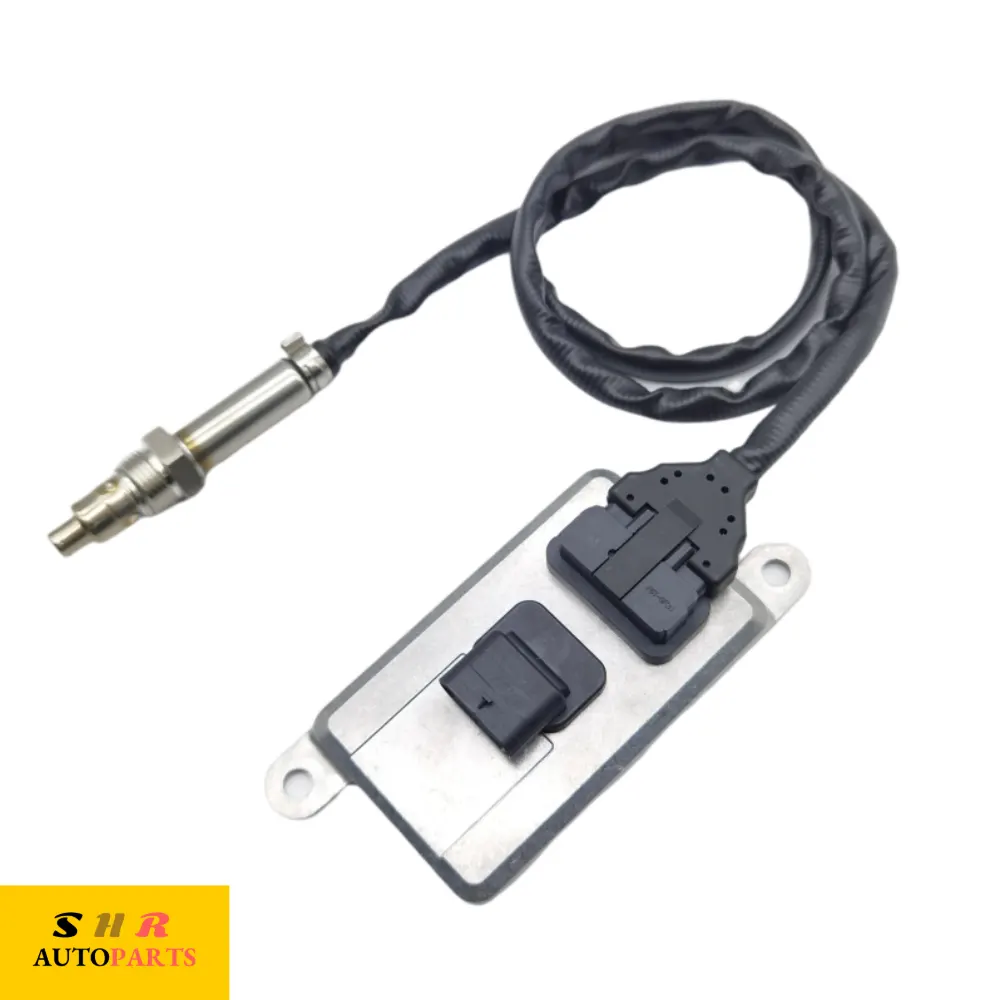
What a NOx sensor does
A NOx sensor (nitrogen oxide sensor) sits in the exhaust system after the diesel oxidation catalyst and inside the SCR catalyst. It measures the concentration of NO and NO₂ in the exhaust stream and reports the values to the engine control unit, which then doses AdBlue/DEF through the dosing injector to convert NOx into nitrogen and water. When the sensor drifts or fails, the ECU derates the engine — typically capping torque or limiting speed — and logs fault codes such as P20EE, P2201 or P229F.
The 5 most common failure modes
- Internal electronics failure — the control head overheats or vibrates loose; the most frequent fault on high-mileage trucks.
- Probe soot contamination — frequent short trips and DPF regeneration cycles coat the sensing element and delay readings.
- Connector corrosion — water ingress raises resistance on the CAN/CAN-lite lines and throws implausible-signal codes.
- Thermal shock cracking — repeated cold starts in winter crack the ceramic sensing element.
- Wiring chafing — harness rubbing on the frame wears through the insulation near the probe.
Replacement tips
Always match the OE part number printed on the control head — not the engine model. Cross-family numbers (for example the 4K0907807 series on Audi/VW platforms) share a footprint but differ in calibration. Every NOx sensor we list is function-tested before shipping and covered by a 12-month warranty.
Browse the complete NOx sensor catalogue or check a specific OE number with the fitment checker on the homepage.